
Incident Triage 101: How to Triage Fast, Fix Faster
Every minute an incident goes untriaged is a minute of compounding risk. Whether it's a production outage, a safety event on a job site, a security breach, or a customer-facing failure, the speed and accuracy of your incident triage process often determines the ultimate cost, measured in dollars, trust, and sometimes safety.
Understanding the Impact of Delayed Triage
When an incident occurs, the first moments are the most chaotic, and the most consequential. Without a structured triage process, teams waste critical time figuring out who owns the problem, how severe it actually is, and who needs to be looped in. That delay shows up as extended downtime, missed compliance windows, and root causes that get lost because nobody captured the details while they were fresh.
Why Manual Triage Doesn't Scale
Sticky notes, ad hoc Slack threads, and shared spreadsheets introduce inconsistency, make it hard to prioritise objectively, and leave organisations with poor visibility into patterns over time. The result is a reactive culture where the same incidents keep recurring because nobody has the data to see the trend.
Why it matters
What Makes Incident Triage Important?
A structured triage process pays off across the entire incident lifecycle:
The first few minutes of an incident set the trajectory for everything after. Structured triage means responders aren't wasting that time figuring out where to even start.
Without clear triage criteria, one person's "urgent" is another person's "can wait." Consistent severity scoring means resources go where they're actually needed most.
Triage assigns clear ownership immediately, so incidents don't sit unclaimed while people assume someone else is handling it.
Every properly triaged incident becomes a data point. Over time, that data reveals patterns, recurring failure points, and process gaps that would otherwise stay invisible.
In regulated industries, a documented incident triage process isn't optional. It's often a legal or contractual requirement.
From alert to close
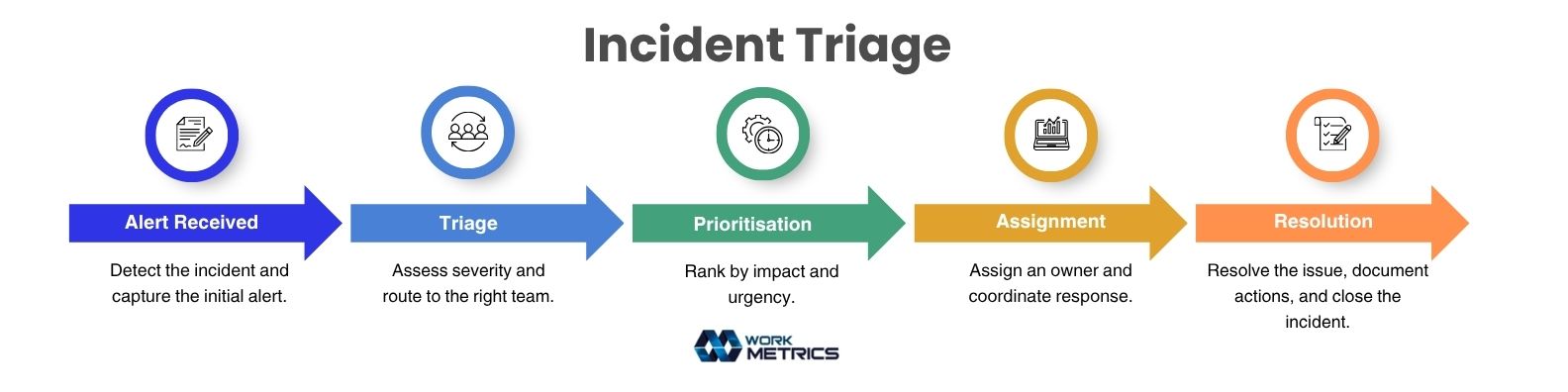
Steps of Incident Triage
A reliable incident triage process generally follows the same core steps, regardless of industry. Tap a step to see how it plays out.
Capture what happened, when, and who reported it, as soon as it surfaces. Automatic timestamping and channel capture mean nothing depends on someone remembering to write it down later.
Determine the type of incident (technical, safety, security, customer-facing, etc.) so it routes to the right process and the right responders from the start.
Apply consistent criteria, impact, urgency, and scope, to assign a severity level rather than relying on gut feeling.
Route the incident to the right person or team immediately, based on severity and type, so it's never left unclaimed.
Alert the people who need visibility, whether that's leadership, affected customers, or compliance teams, without waiting for full resolution.
Begin containment or mitigation steps to stop the incident from getting worse while a full fix is worked out.
Record the full timeline and outcome, then feed it into post-incident analysis to prevent recurrence.
Built for the moment
Why Incidentreport.net Stands Out for Incident Triage
Incidentreport.net was built specifically around the triage moment, the critical window between "something happened" and "we know what to do about it." Unlike generic ticketing tools retrofitted for incidents, it's designed end to end for rapid, structured triage:
Guided intake forms
Ensure every report captures the details that actually matter, without overwhelming the person filing it.
Automated severity classification
Removes guesswork and keeps prioritisation consistent across teams and shifts.
Smart routing
Gets incidents to the right responder immediately, cutting out manual handoffs.
Live dashboards
Give leadership and stakeholders real-time status without pulling responders away from the actual work.
Built-in reporting and analytics
Turn every incident into a data point that helps prevent the next one.
Explore our Incident Status Page Platform
A fast, consistent triage process doesn't just shorten downtime, it builds a culture of calm, confident incident response across the entire organisation.