The Essential Guide to Risk Assessment Apps: Streamlining Safety and Compliance
In high-stakes industries, the ability to identify a hazard before it leads to an accident is the foundation of operational success. While traditional methods relied on clipboards and paper trails, the modern enterprise now relies on a risk assessment app.
By digitizing the inspection process, a risk assessment app ensures that safety protocols are followed, hazards are documented in real-time, and compliance is never left to chance.
What Sets a Risk Assessment App Apart?
While "analysis" focuses on the big-picture strategy, a risk assessment app is an operational tool. it is designed for the people on the front lines- foremen, safety officers, and department heads- who need to evaluate specific tasks or environments quickly and accurately.
The Move from Reactive to Proactive
In the past, a risk assessment was often something filed away after an incident occurred. A dedicated app flips this workflow. It prompts users to complete a "Pre-Task" or "Point-of-Work" assessment, ensuring that a project only moves forward once all safety boxes are checked.
View Risk Assessment Forms, Tools, Registries and Samples
Critical Functions of a Mobile Risk Assessment App
To be effective in a fast-moving business environment, a risk assessment app must offer more than just digital forms. It needs to be a collaborative hub for safety.
1. Photo Documentation and Evidence
One of the most valuable features of an app is the ability to attach photos directly to a risk report. If a safety officer identifies a frayed electrical cord or a structural crack, they can snap a photo, circle the hazard on their screen, and attach it to the digital file instantly.
2. Digital Signature Capture
Accountability is a major component of risk management. Apps allow supervisors and workers to sign off on assessments using their touchscreens. This creates a time-stamped, legally defensible record that the assessment took place before the work began.
3. Hazard Identification (HAZID) Libraries
Rather than starting from scratch every time, a risk assessment app often includes pre-built libraries of common hazards. This helps standardize the language used across the company, making it easier to pull data later for company-wide safety reviews.
4. Dynamic Logic and Branching
Modern apps use "if/then" logic. For example, if a worker checks "Yes" for "Working at Heights," the app can automatically open a sub-menu of specific fall-protection questions. This ensures the assessment is thorough without being unnecessarily long.
Why Your Organization Needs to Digitize
Eliminating the "Paperwork Gap"
Paper assessments are often lost, illegible, or filed too late to be useful. A risk assessment app syncs data to the cloud the moment a user hits "submit." This gives management instant visibility into the safety status of every job site, regardless of location.
Meeting ISO and OSHA Standards
Regulatory bodies like OSHA (USA) or HSE (UK) require strict documentation of safety protocols. Using a risk assessment app ensures that your business stays compliant with standards like ISO 45001 (Occupational Health and Safety). The app acts as an automated filing cabinet, making audits seamless and stress-free.
See an Example Risk Assessment Template Form
Frequently Asked Questions
Is a risk assessment app suitable for small businesses?
Absolutely. While large corporations use them for complex supply chains, small businesses benefit from the reduced administrative burden and the protection they offer against costly legal liabilities.
How does an app help with "Dynamic Risk Assessment"?
Dynamic risks are those that change quickly (e.g., weather conditions on a construction site). An app allows workers to update their assessment in seconds as conditions change, ensuring the safety plan is always current.
Can I customize the risk levels?
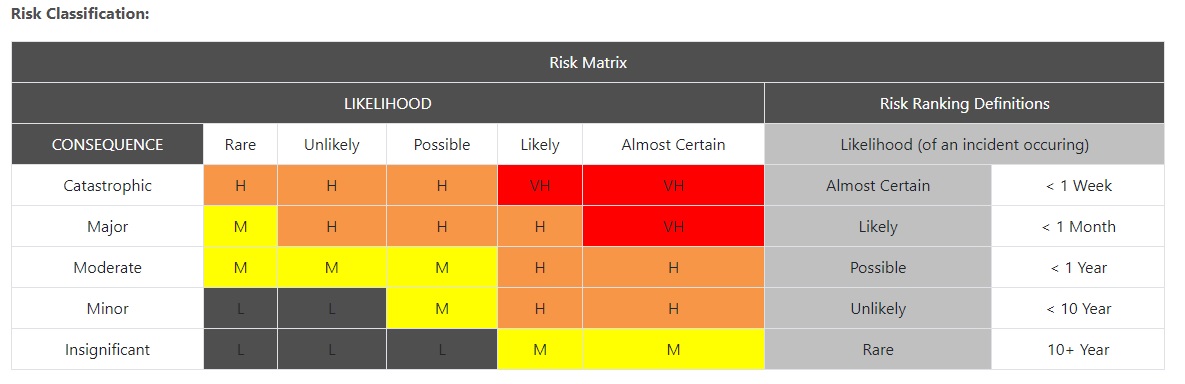
Yes. Most apps allow you to define your own risk appetite, whether you use a 3x3, 4x4, or 5x5 matrix to calculate risk scores.
Investing in a Safer Future
Adopting a risk assessment app is about more than just technology; it is about building a culture of safety. When tools are easy to use and accessible on a smartphone, employees are more likely to engage with safety protocols. The result is a more informed workforce, a more compliant business, and a significantly lower chance of unforeseen disasters.